YouTube Tag Extractor – Find and Copy Video Tags Easily
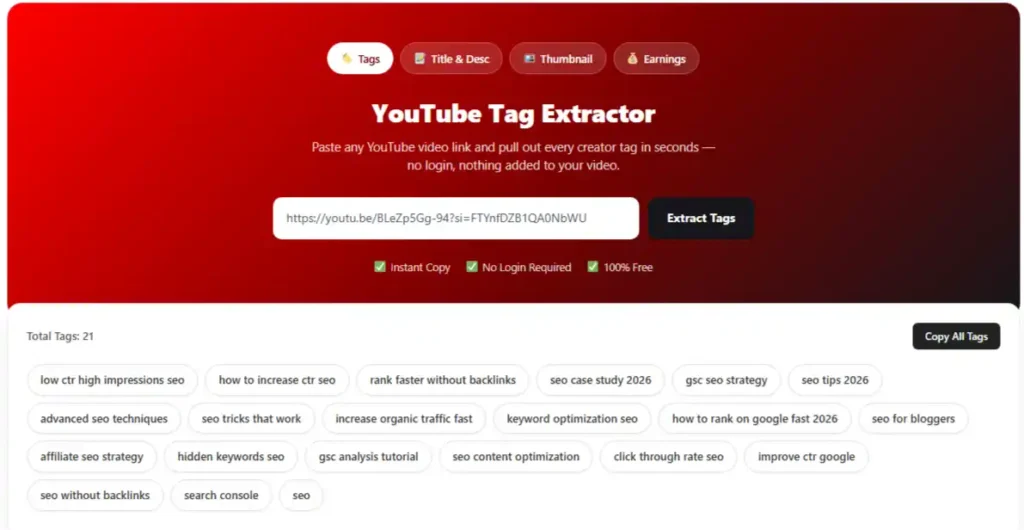
The YouTube Tag Extractor helps you view the tags associated with a public YouTube video without having to manually search through the page’s technical information. Paste a video’s URL into the tool, review the available terms, and copy the results to research content, conduct competitor analysis, or understand the language used around a topic.
What is a YouTube tag extractor?
This tool retrieves the available tag information from an existing video’s URL and displays the results in an easier-to-read format. Instead of trying to inspect the page’s source code or work with technical code, you can research the terms associated with a particular video.
Tags are separate from a video’s title, description, and hashtags. They provide additional descriptive information, which can be helpful when researching how creators have addressed a topic.
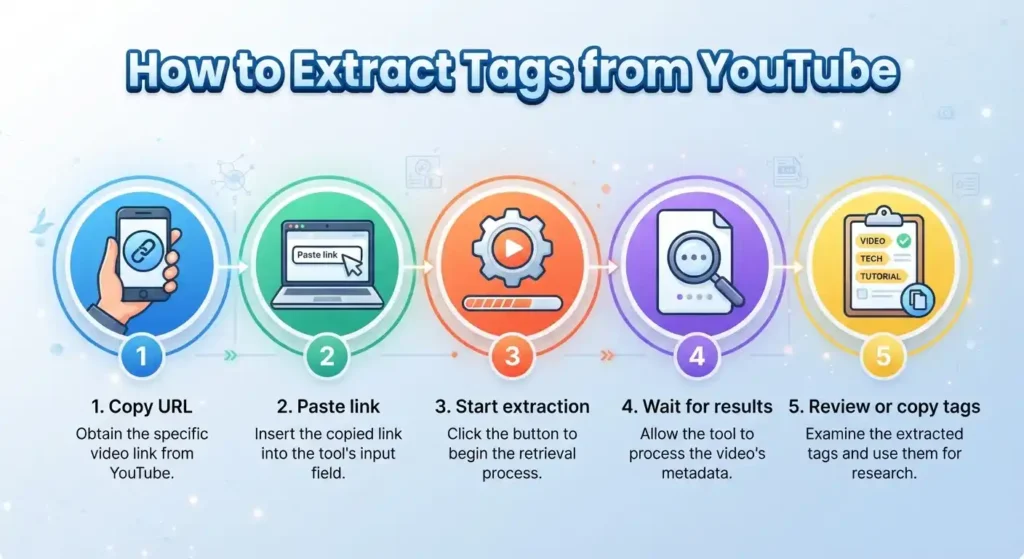
How to Extract Tags from YouTube
The process is simple:
- Copy the URL of the YouTube video you want to inspect.
- Paste the link into the input field.
- Start the extraction process.
- Wait for the available information to appear.
- Review or copy the returned tags.
The tool handles the retrieval process and displays the available results in one place, making it more convenient when you need to analyze multiple videos.
What Can We Learn from Video Tags?
A list of extracted tags can reveal the terminology associated with a particular video. When multiple creators cover the same topic, comparing their terms can reveal alternative phrasing, related concepts, and niche-specific language that may not be obvious from the title alone.
For example, videos about homemade pizza may include terms related to pizza recipes, dough preparation, easy cooking, or specific techniques. Another creator covering the same general topic might use different terminology. Looking at several examples gives you a broader picture of the language surrounding that topic.
The tool works best as a research utility. It shows the terms associated with an existing video; it does not automatically determine which phrases will work best for your own content.
YouTube Tags, Keywords, and Hashtags
These terms are related, but they describe different things.
Tags are metadata associated with a video. Keywords are words or phrases relevant to a topic or search query. Hashtags are tags that begin with # and can be displayed and clicked on YouTube.
finding a video’s tags does not reveal all the phrases viewers might search for, nor does it provide a ready-made hashtag strategy. For more useful research, consider the video’s topic, title, description, the audience’s language, and search intent along with any metadata you retrieve. For more context, see YouTube’s official guidance on video tags
How to View Tags on YouTube Videos
YouTube does not typically display every piece of video metadata as an obvious list on the standard playback page. If you want to examine the terms associated with a particular video, using its URL in a data extraction tool can provide a more direct way to explore the available information.
Results may vary from video to video. If no terms are returned, this does not necessarily mean that the video lacks metadata. It is possible that the information is simply not accessible through the current retrieval method.
Using Tags for Research and Competitor Analysis
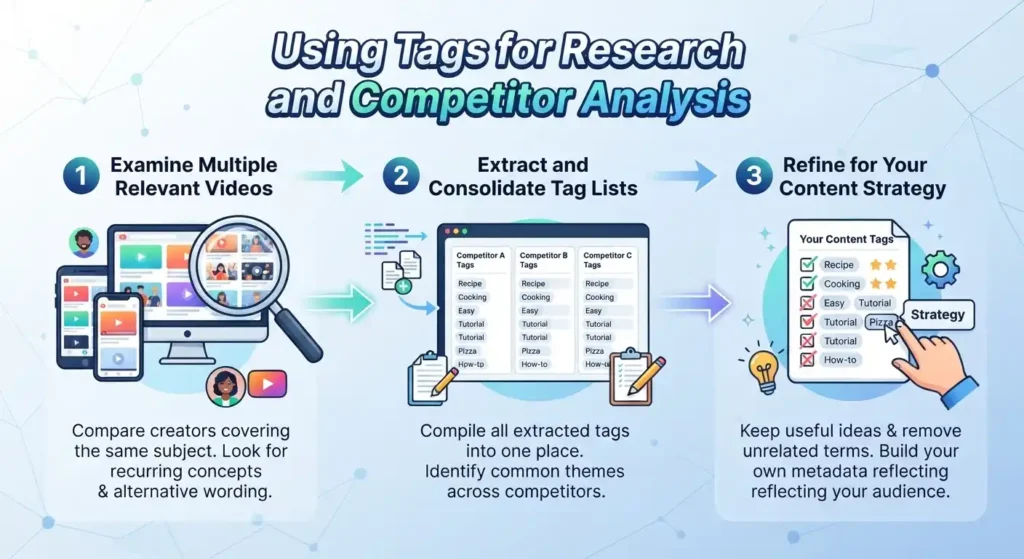
The most useful approach is to review several relevant videos rather than treating a list of tags as a complete SEO strategy. Compare creators who cover the same topic, look for recurring concepts, consider alternative phrasing, and eliminate terms that don’t accurately describe your own content.
For example, if several videos in a niche repeatedly use related phrases, it’s worth exploring those terms through broader keyword and audience research. A phrase that appears only once may be much less relevant, especially if it doesn’t align with your own topic.
If you’re wondering which tags to use on YouTube, relevance should take precedence over search volume. A useful tag should accurately describe what viewers will find in your video.
This approach also helps you avoid a common mistake: copying another creator’s entire set of metadata without considering whether those terms fit your topic. The information you gather is best treated as a research reference, while your final metadata should reflect your own content and audience.
Do YouTube tags help with views?
Searches for “YouTube tags to get views” and “how to tag your YouTube videos to get more views” show that many creators expect metadata to directly increase their reach.
No combination of tags can guarantee views. Tags can provide additional context about a video, but performance also depends on viewer interest, content quality, presentation, viewer satisfaction, and how well the video aligns with its intended audience.
This makes tag research useful for understanding terminology, but it shouldn’t be treated as a shortcut to rankings or guaranteed traffic.
Extractor, Verifier, or Generator?
People search for this type of functionality under various names, including tag extractor, tag finder, tag verifier, video tag extractor, and tag generator. These terms may overlap in search results, but they do not necessarily describe the same task.
An extractor retrieves available information from an existing video. A verifier may focus on inspecting or validating that information, while a generator creates new suggestions. If your goal is to find terms associated with a particular video, retrieval is the relevant function.
When tags are not returned
Start by verifying that the link you provided points to the correct video and that the page is publicly accessible.
If nothing appears, the relevant information may not be available through the current extraction method. Video restrictions, deleted content, technical changes, or differences between pages may affect the result.
an empty response should be treated as a retrieval constraint rather than definitive proof that no tags exist.
Frequently Asked Questions
More YouTube Tools
Researching a video often involves more than just its tags. You can also explore related tools to extract titles and descriptions, find video keywords, or check other available YouTube metadata. Using the right tool for each type of information keeps your research organized, rather than trying to make a single tool handle unrelated tasks.
YouTube’s guidance on video descriptions
Find Useful Video Tags
Do you have a YouTube video you want to research? Use the YouTube Tag Extractor to review available terms, compare relevant videos, and identify language worth exploring further. Keep the useful ideas, ignore anything unrelated, and build your own metadata around the content you actually publish.